
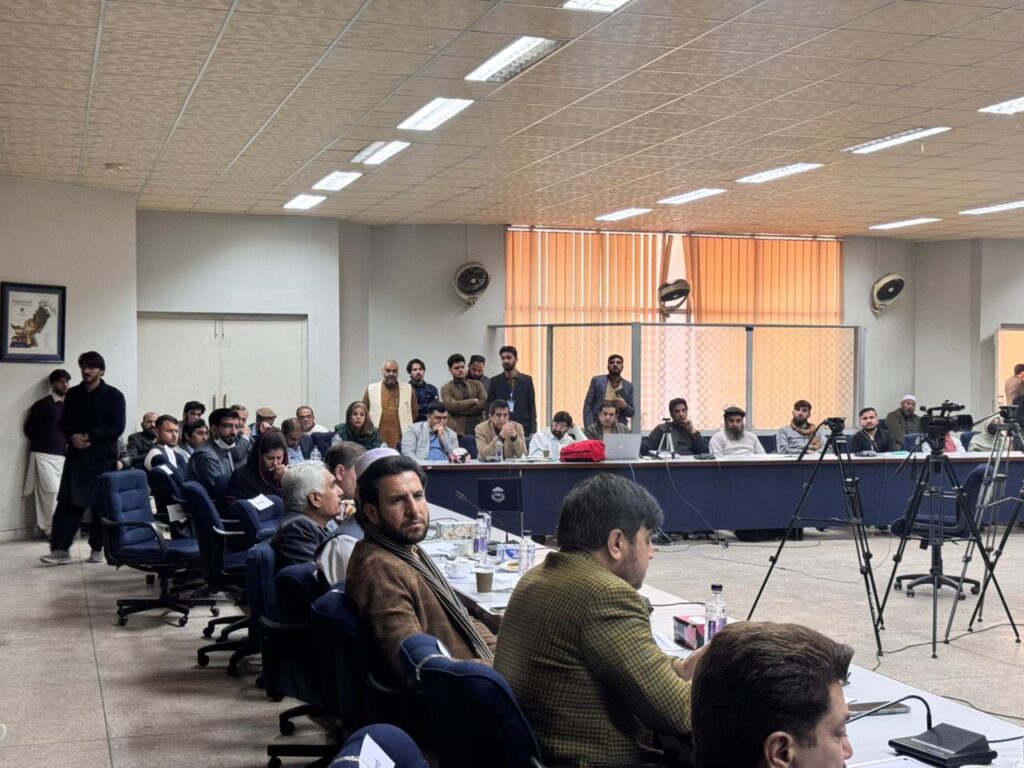
Peshawar, December 1, 2025 — The University of Peshawar hosted a one-day seminar titled “NFC Share and Challenges Faced by Khyber Pakhtunkhwa” at the Sir Sahibzada Abdul Qayyum (SSAQ) Museum Conference Hall. The event brought together a diverse group of political leaders, journalists, academics, and students for an in-depth discussion on the province’s evolving fiscal landscape.
Organized by the Society of Economics and Development Students (SEDS) in collaboration with the Development Insights Lab (DIL) and the Business Incubation Center (BIC), the seminar aimed to create an informed dialogue on the financial constraints and policy challenges confronting Khyber Pakhtunkhwa.
The session was moderated by Dr. Fahim Nawaz, Deputy Coordinator DIL and Coordinator SEDS.
In his welcome remarks, Professor Dr. Johar Ali, Vice-Chancellor, University of Peshawar, underscored the importance of evidence-based discussions for shaping Pakistan’s fiscal future and strengthening public understanding of intergovernmental financial arrangements.
Delivering the keynote address, Dr. Sajjad Ahmad Jan, Chairman, Department of Economics, provided a comprehensive overview of the National Finance Commission (NFC) Award—explaining inter-provincial fiscal relations, revenue-sharing formulas, and the financial responsibilities devolved to provinces under Pakistan’s federal structure.
A distinguished panel of political leaders, including Mr. Ahmad Kundi (PPP), Ms. Shagufta Malik (ANP), Mr. Jalil Jan (JUI-F), Mr. Kamran Bangash (PTI), Mr. Taimur Jhagra (PTI), Mr. Inayat Ullah Khan (JI), and Mr. Salah ud Din (ANP), shared valuable insights on KP’s fiscal rights, the impact of delayed NFC awards, the challenges of integrating the merged districts, and the pressing need for a transparent and equitable fiscal distribution system.
Senior journalists — Mr. Lihaz Ali, Mr. Fida Adeel, and Mr. Mehmood Jab Babar — also addressed the seminar, offering perspectives from the media on public expectations, communication gaps, and the role of accountability in fiscal governance.
In his concluding remarks, the Vice-Chancellor expressed gratitude to the speakers, organizers, and participants for contributing to a meaningful and timely discussion on one of KP’s most critical financial issues. The seminar concluded with a vibrant question-and-answer session, followed by group photographs.